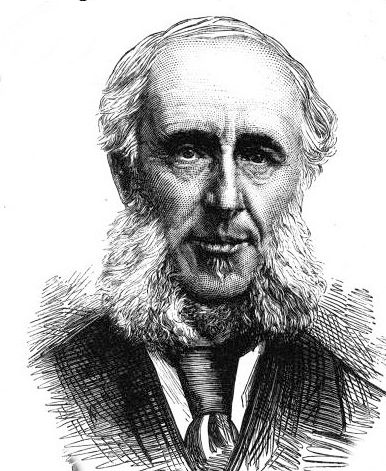
From The Graphic
The Man Behind the Cricket Ground
The story begins not with cricket, but with a remarkable Liverpool businessman named John Torr, who hailed from Riby in Lincolnshire.
In 1850, at the bankruptcy sale of the influential Stanley family, Torr purchased a parcel of land known as Carlett Park together with land around the newly-constructed Eastham Ferry Hotel.
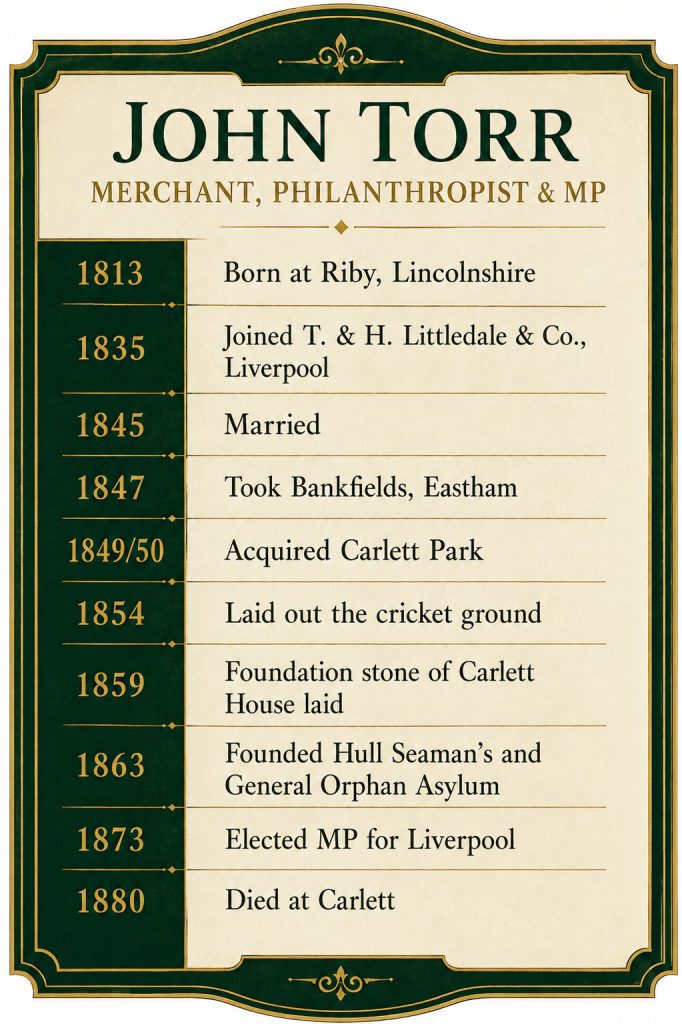
The panels below reflect the significant dates in John Torr’s life (left) and the land in Eastham that he purchased in the Stanley bankruptcy sale that was known as Carlett Park (right).
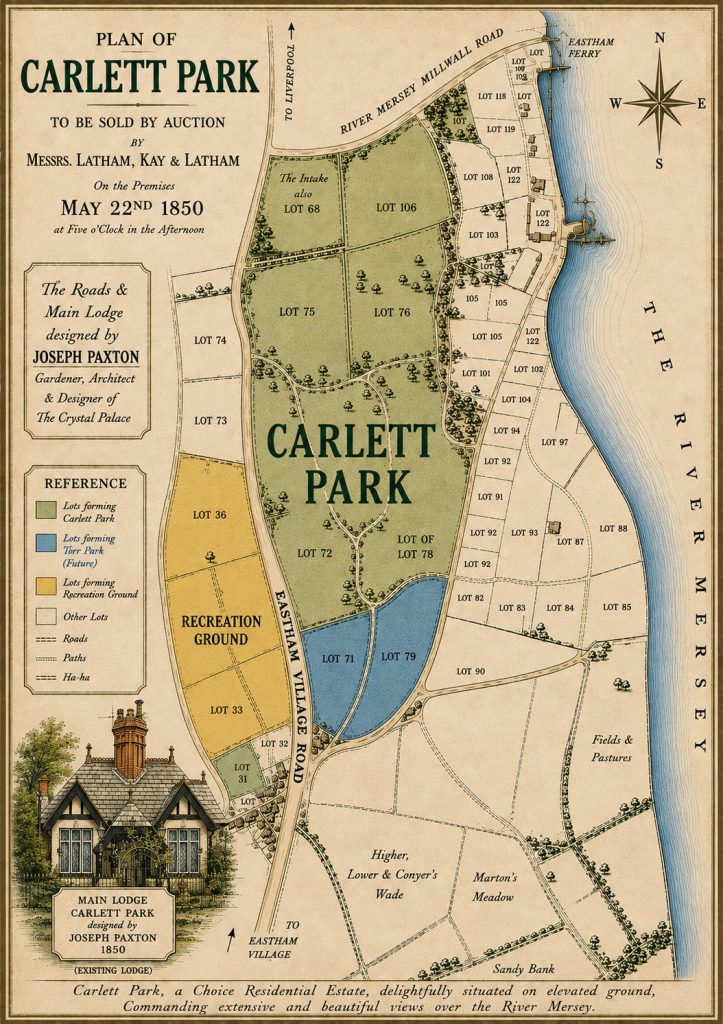
The area coloured blue on the plan, above right, would eventually become Torr Park. The track that bisects is still visible today and was the main access to the not-yet-built Carlett House. The plan also shows the Recreation Ground which was to play an important part in the life of the village.
Joseph Paxton
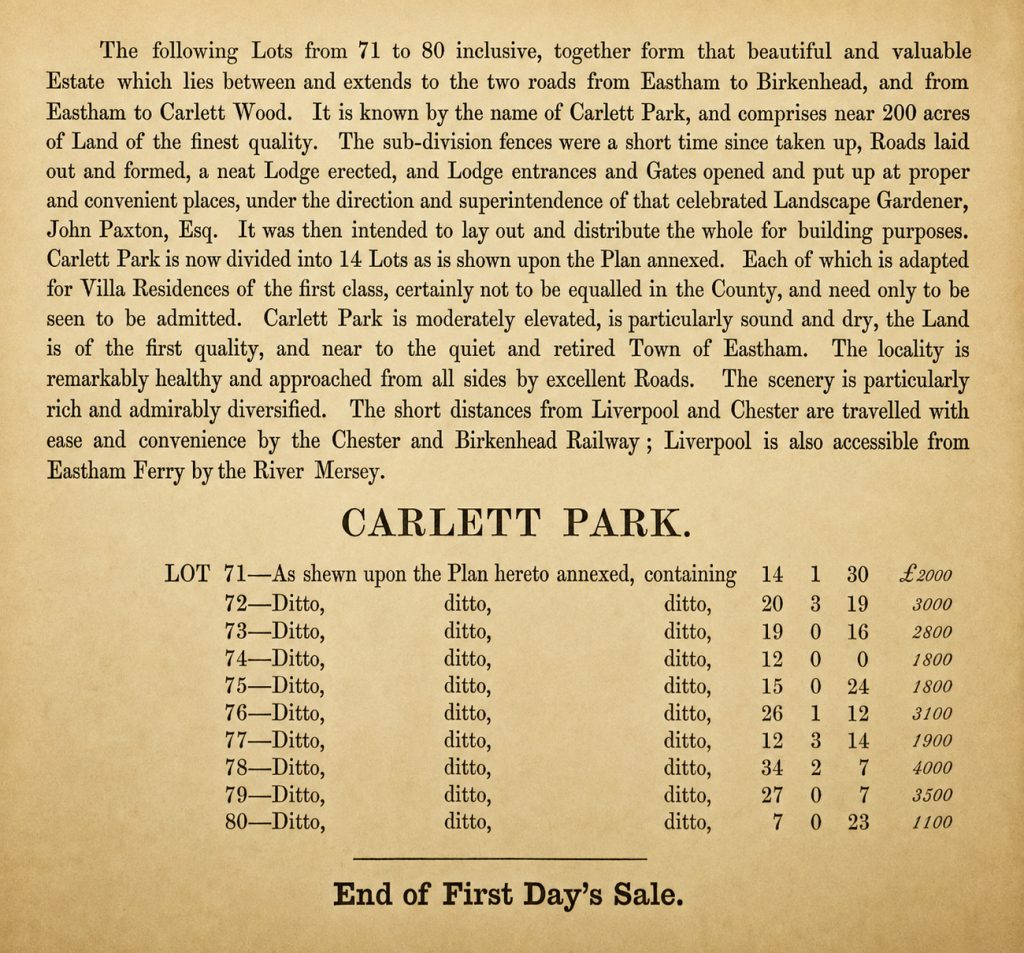
The panel above is from the Estate Agent’s Sale brochure. It describes the sale particulars of the land that Torr bought. It states: “Roads laid out and formed, a neat Lodge erected, and Lodge entrances and Gates opened ….under the direction and superintendence of the celebrated Landscape Gardener, John Paxton, Esq.”
The copy writer of course, meant Joseph Paxton. Joseph Paxton was active in the area designing Birkenhead Park. He had been employed by Sir William Jackson (chairman of Birkenhead Town Commissioners) to design and build Birkenhead Park, the first public Park in the world. Jackson’s brother had a lease on the Stanley-owned Eastham House, meaning there was a fairly strong connection.
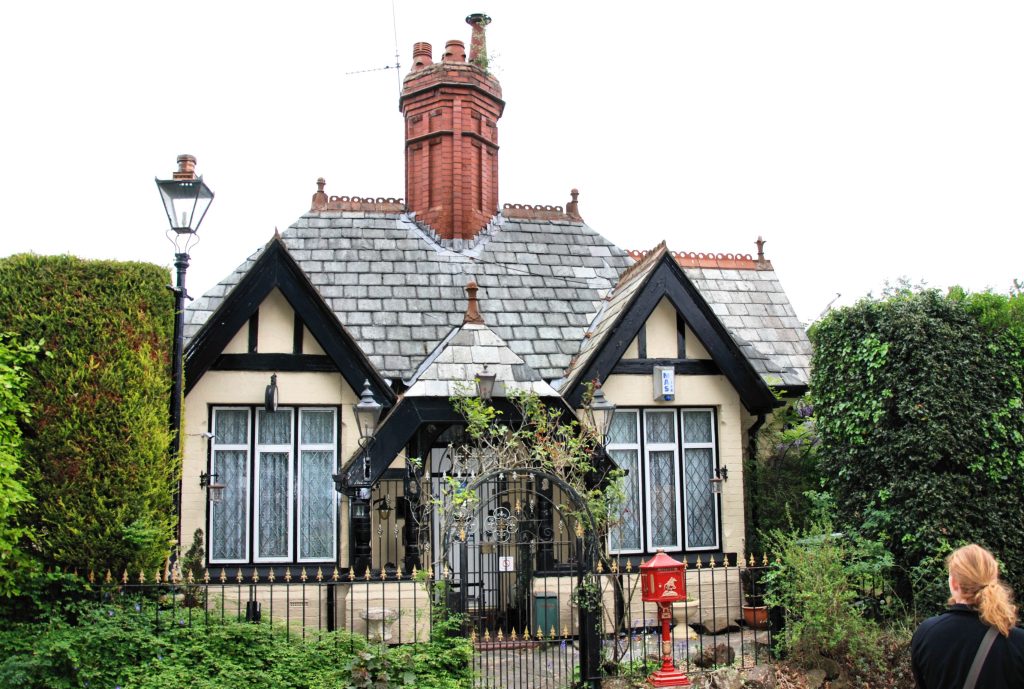
Torr’s Vision for Carlett House
A deeply religious man, Torr kept meticulous diaries throughout his life. Those diaries still survive today and allow us to glimpse his thoughts as he considered creating a new home overlooking the River Mersey.
On Sunday 17 March 1850 he confided in his diary:
“A fancy, if it may only be a passing one, has taken possession of my mind to build a House on Carlett Hill…”
John Torr’s diary, Sunday 17 March 1850
Yet before the house was even started something rather unexpected happened……!
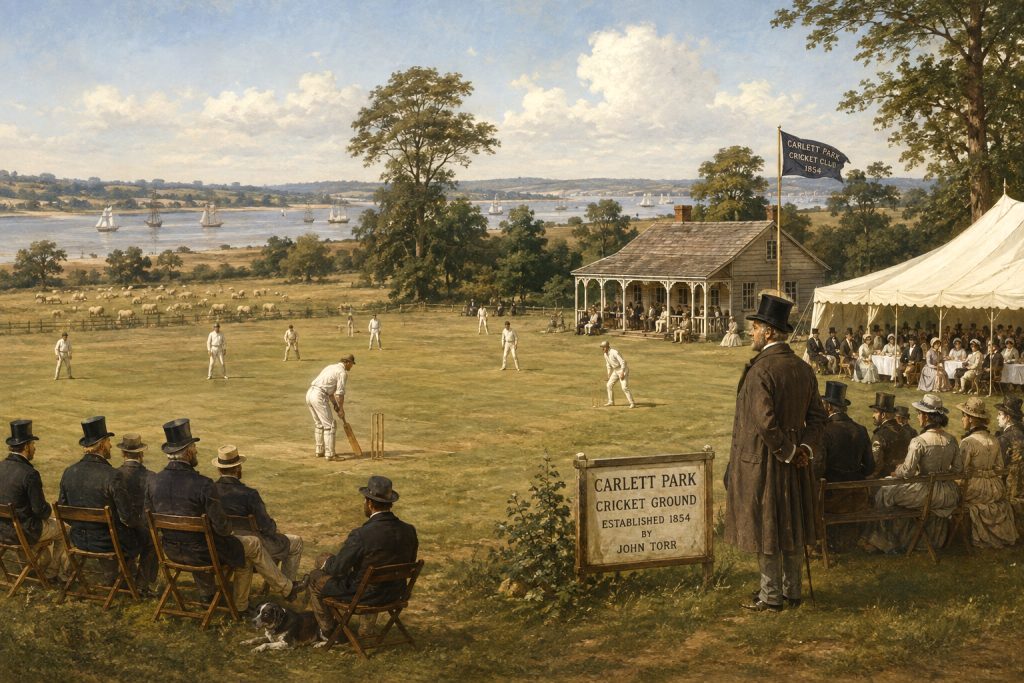
Some four years after his diary entry voicing his ambition to build a house, he built a cricket ground! He added a pavilion and, two years later, organised the first game, a game that was to be distinguished by the gargantuan cricket tea laid on for his influential friends. This is described in the next chapter
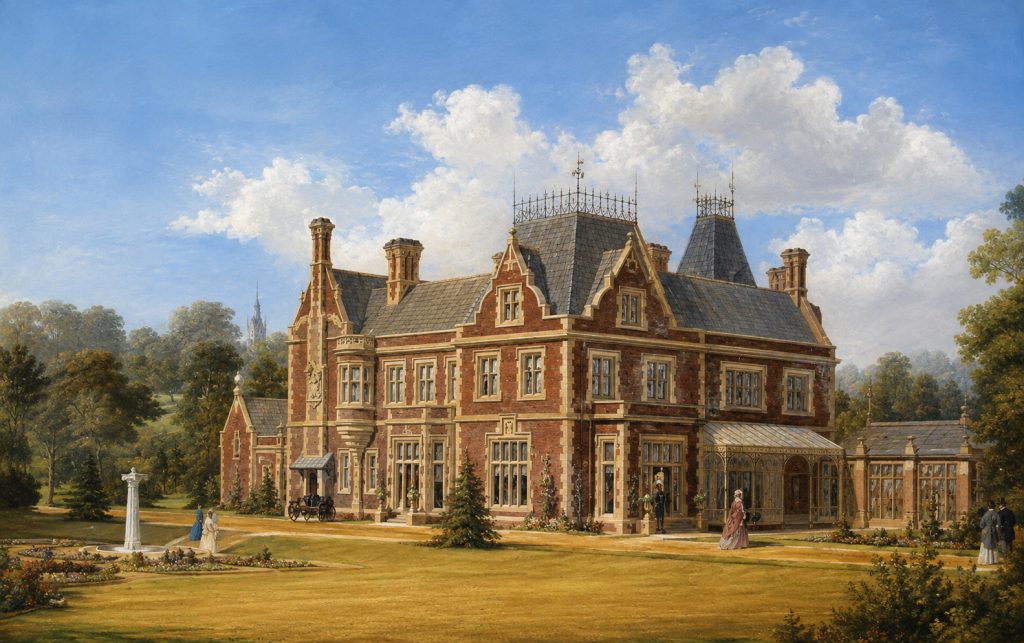
Only afterwards, between 1859 and 1861, did he build the magnificent house designed by the distinguished architect Thomas Henry Wyatt.
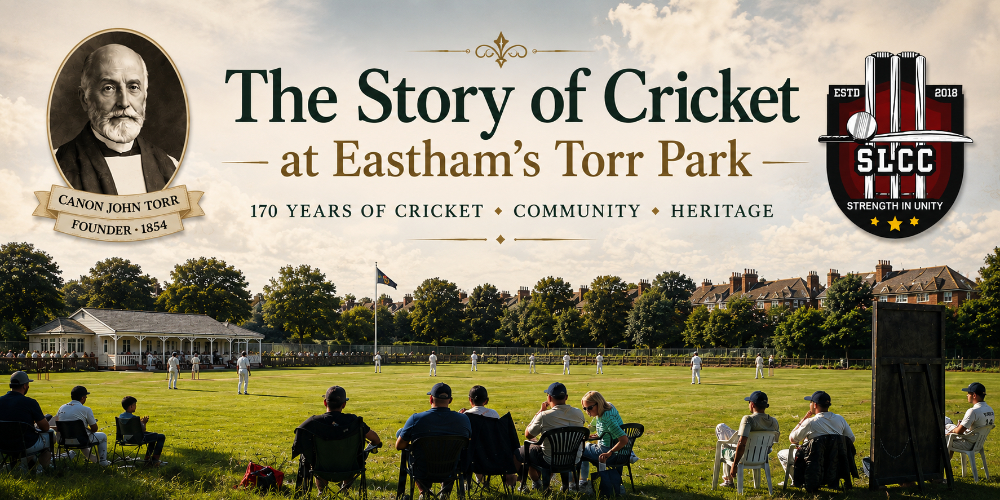
Whether intentional or not, that decision created a sporting legacy that continues more than 170 years later.